

Calculator to help increasing or decreasing evenly
Continue reading “Calculate increase/decrease rates”Gauge and stitch counts
Calculate your gauge from a swatch, the number of stitches you need and the pattern size to make.
Continue reading “Gauge and stitch counts”Intarsia worked in the round
Intarsia worked flat
Tubular cast on for 2×2 rib
Also known as: Stretchy cast-on for 2×2 rib
Continue reading “Tubular cast on for 2×2 rib”Recognising the basics
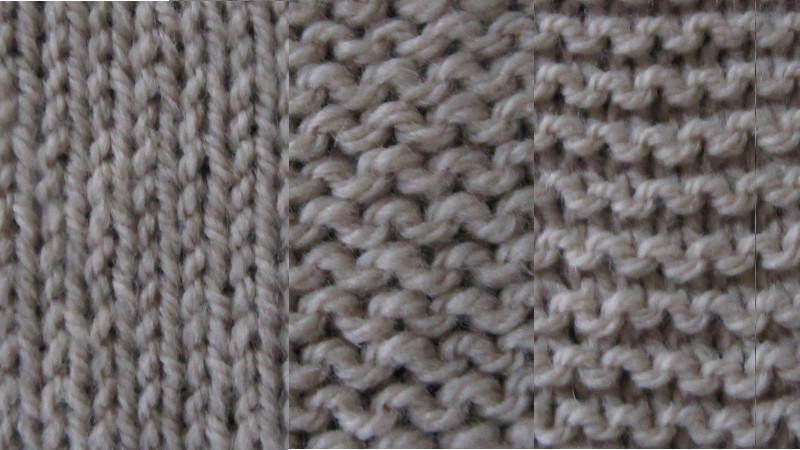
All knitting is based on variations of two basic stitches (knit and purl, where the working yarn passes through an existing loop in the fabric) and yarn overs (where the working yarn does not pass through an existing stitch). Recognising these and their variations in your knitted fabric is a key skill for reading your knitting.
Continue reading “Recognising the basics”Stitch markers
Introduction to stranded colour work tutorial – Activity 2
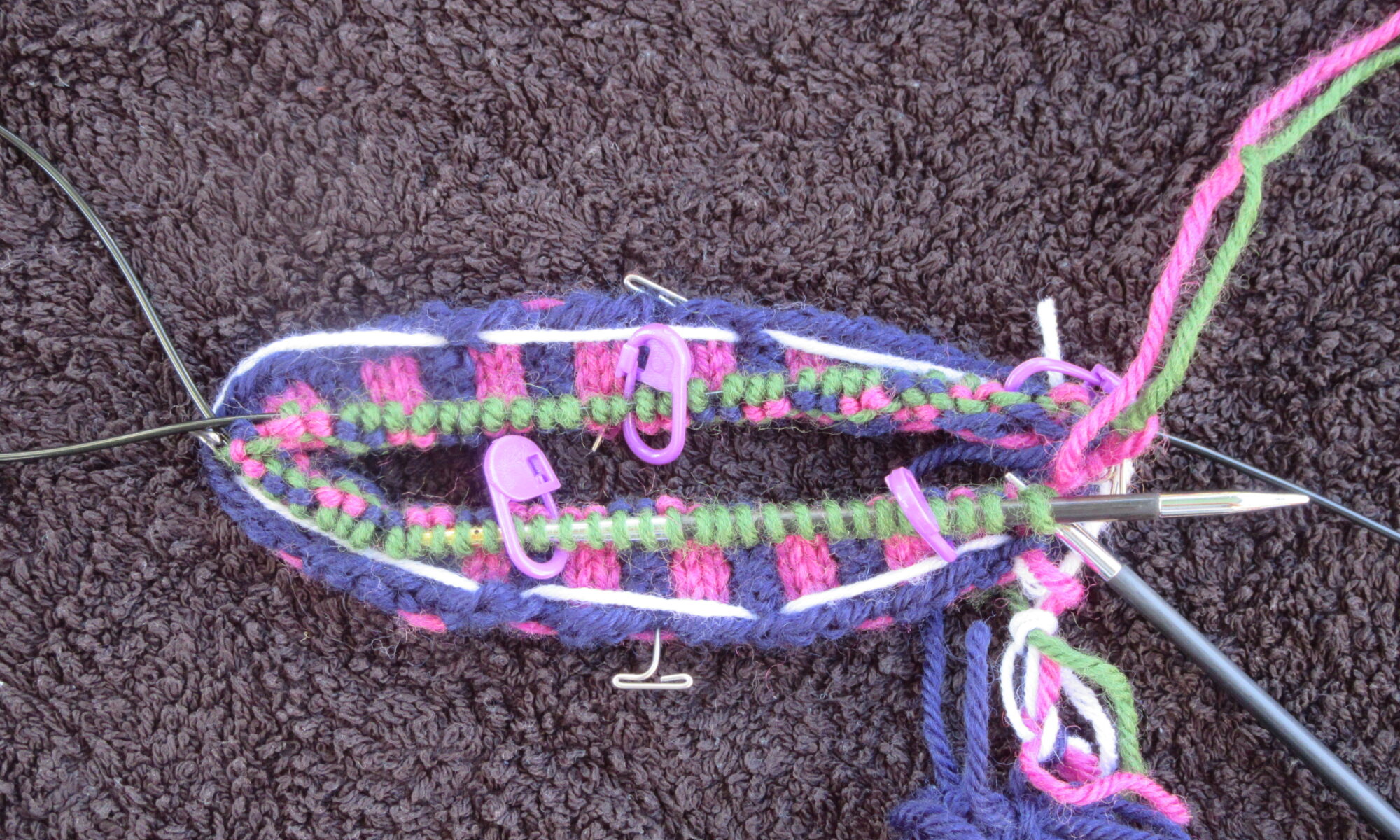
Activity 2: Knit stranded colour work in the round
You should have already completed Activity 1: Vertical stripe knitting and have 3 rounds of vertical stripe ribs.
In this activity you will learn how to read a chart for colour knitting and practice knitting with two colours at a time to create a motif.
Continue reading “Introduction to stranded colour work tutorial – Activity 2”Introduction to stranded colour work tutorial – Activity 1
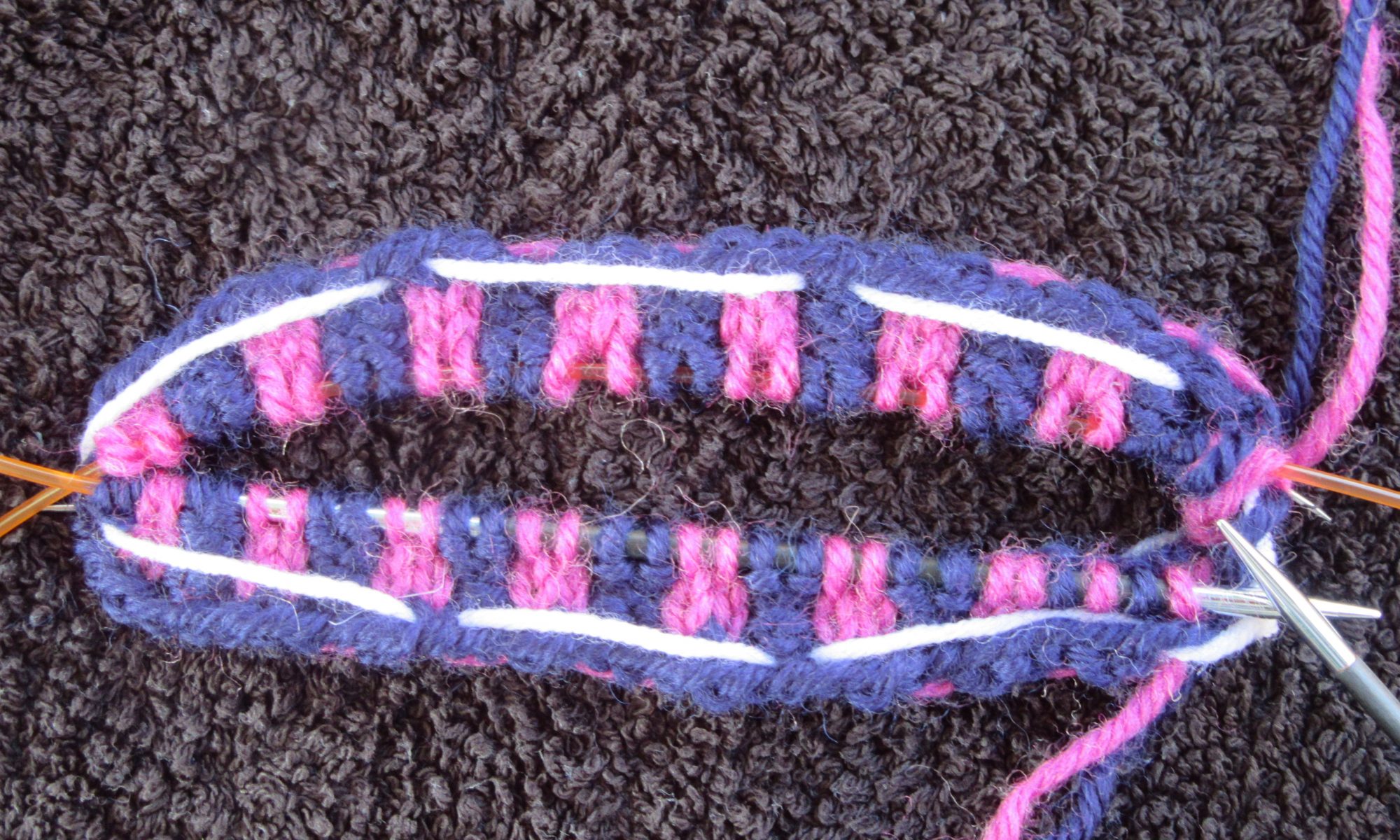
Activity 1: Vertical stripe rib
Before you start, please make sure that you have done everything in Activity 0. For instance, have you downloaded the handout and have the yarn and tools listed in Activity 0.
Instructions for this activity are on page 6 of the handout. You do not need to swatch for this project because its size does not matter. Instead, you can treat the entire project as a swatch to practice. Then make another one if you want to have a “showcase” to show others.
Continue reading “Introduction to stranded colour work tutorial – Activity 1”Introduction to stranded colour work tutorial – Activity 3
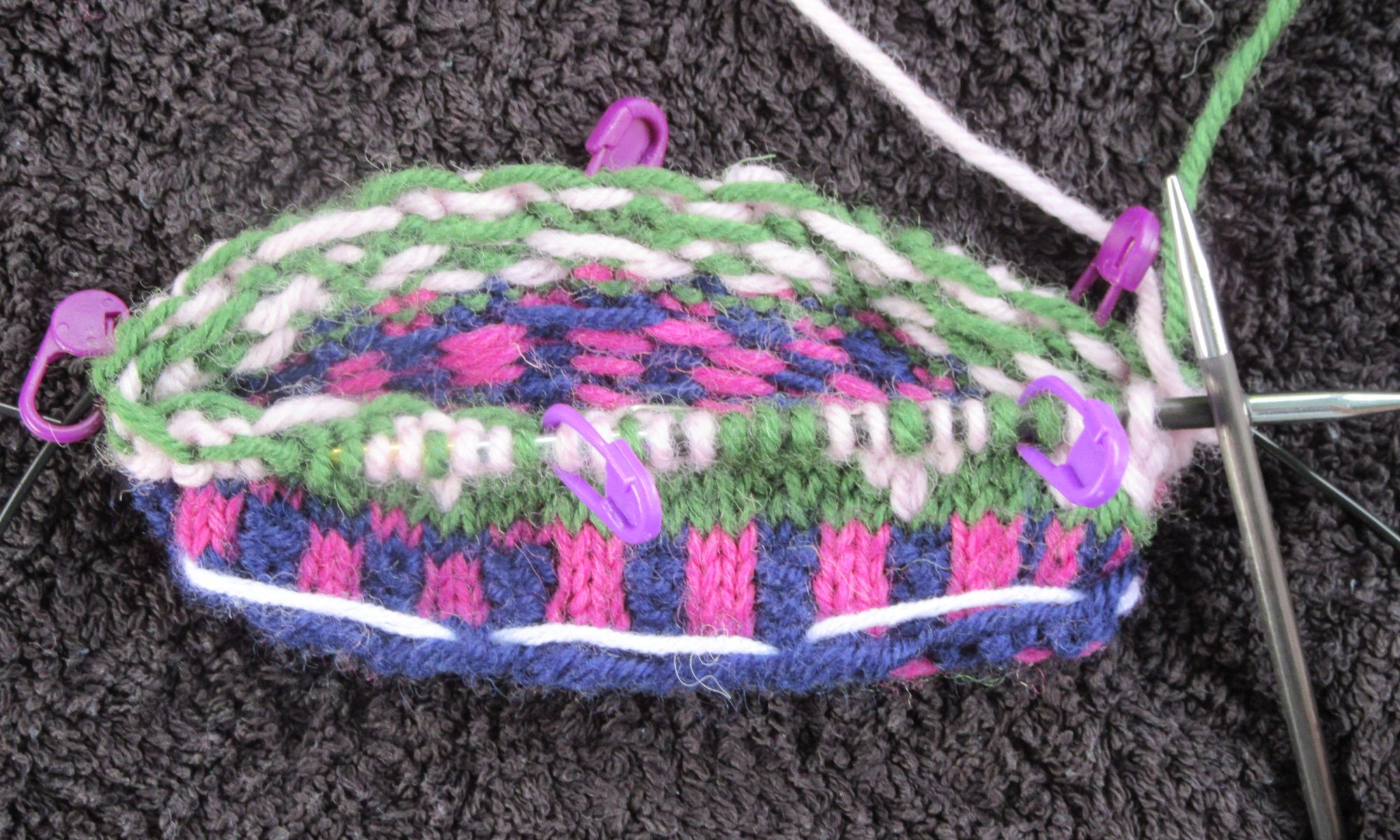
Activity 3: Catch floats on the knit side of the work
You should have already completed Activity 2: Knit stranded colour work in the round and have competed 2 rounds of your motif.
In this activity you will learn how to catch (trap) floats when you are knitting on the public side of stranded colour work. Catching floats helps maintain an even tension. Shorter floats are also less likely to catch in fingers.
The instructions for this activity are on page 9 and 10 of the handout.
Continue reading “Introduction to stranded colour work tutorial – Activity 3”